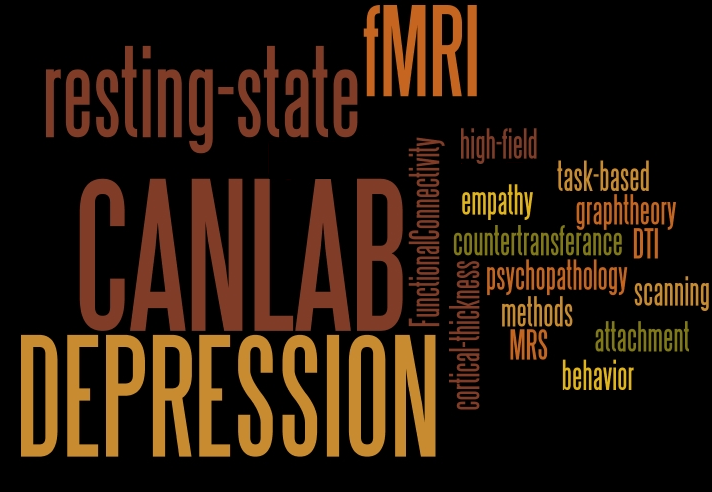
Our Lab is embedded at the interface of the Clinic for Psychiatry and Psychotherapy Jena, Center for Intervention and Research on adaptive and maladaptive brain Circuits underlying mental health (CIRC), Leibniz Insitute for Neurobiology Magdeburg and Eberhard Karls University Tubingen.
Our research focusses on neurobiological characteristics of affective disorders to identify diagnostic and therapeutic options.
We try to shed light on all aspects and manifestations of the disease, by conducting experiments at a variety of MR Scanner and other neuroimaging environments, and where necessary, we develop novel neuroimaging methods to address clinically driven research problems.